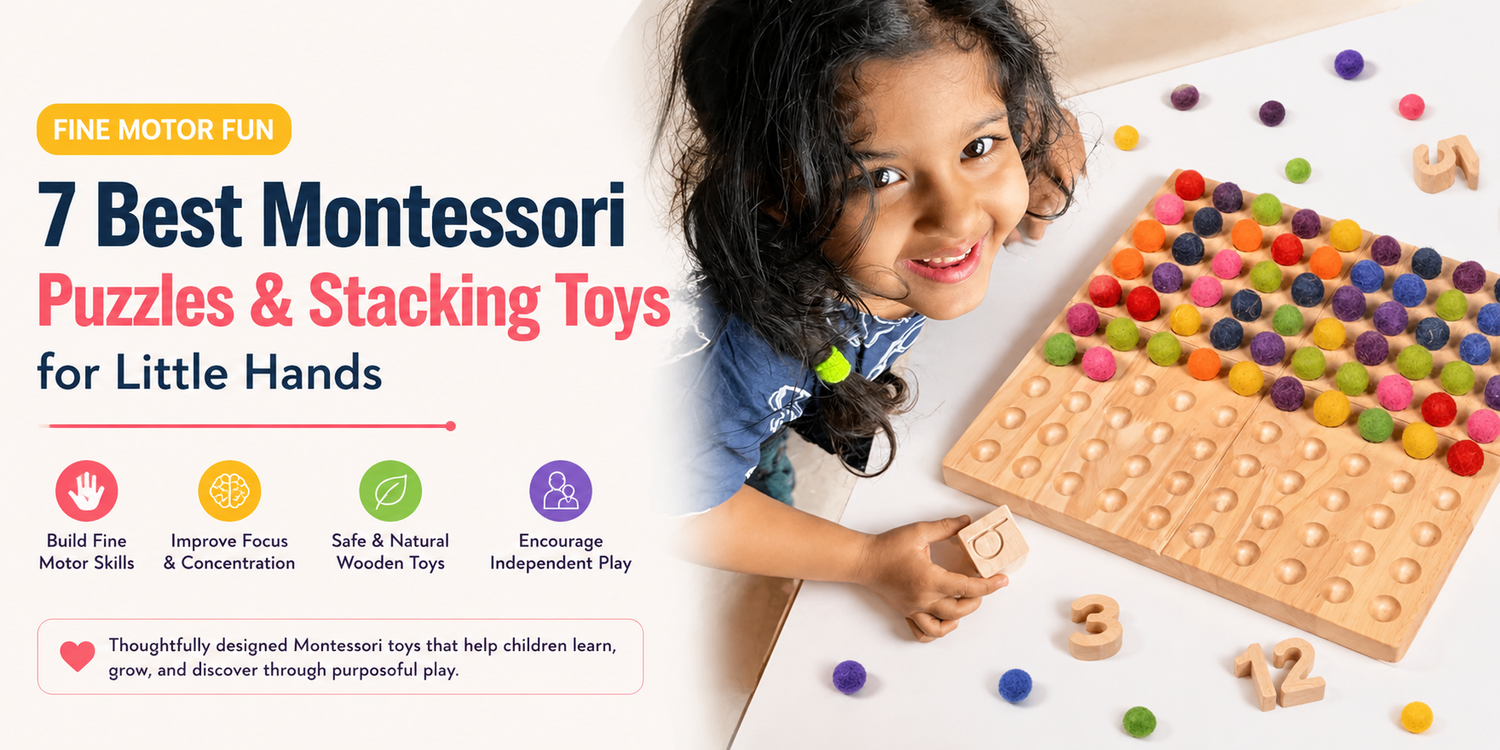
Watching your toddler carefully place a wooden ring onto a stacker or fit a puzzle piece into place may seem like simple play, but these tiny actions are building essential life skills. Fine motor development plays a major role in a child’s ability to write, eat independently, button clothes, hold crayons, and perform everyday tasks with confidence.
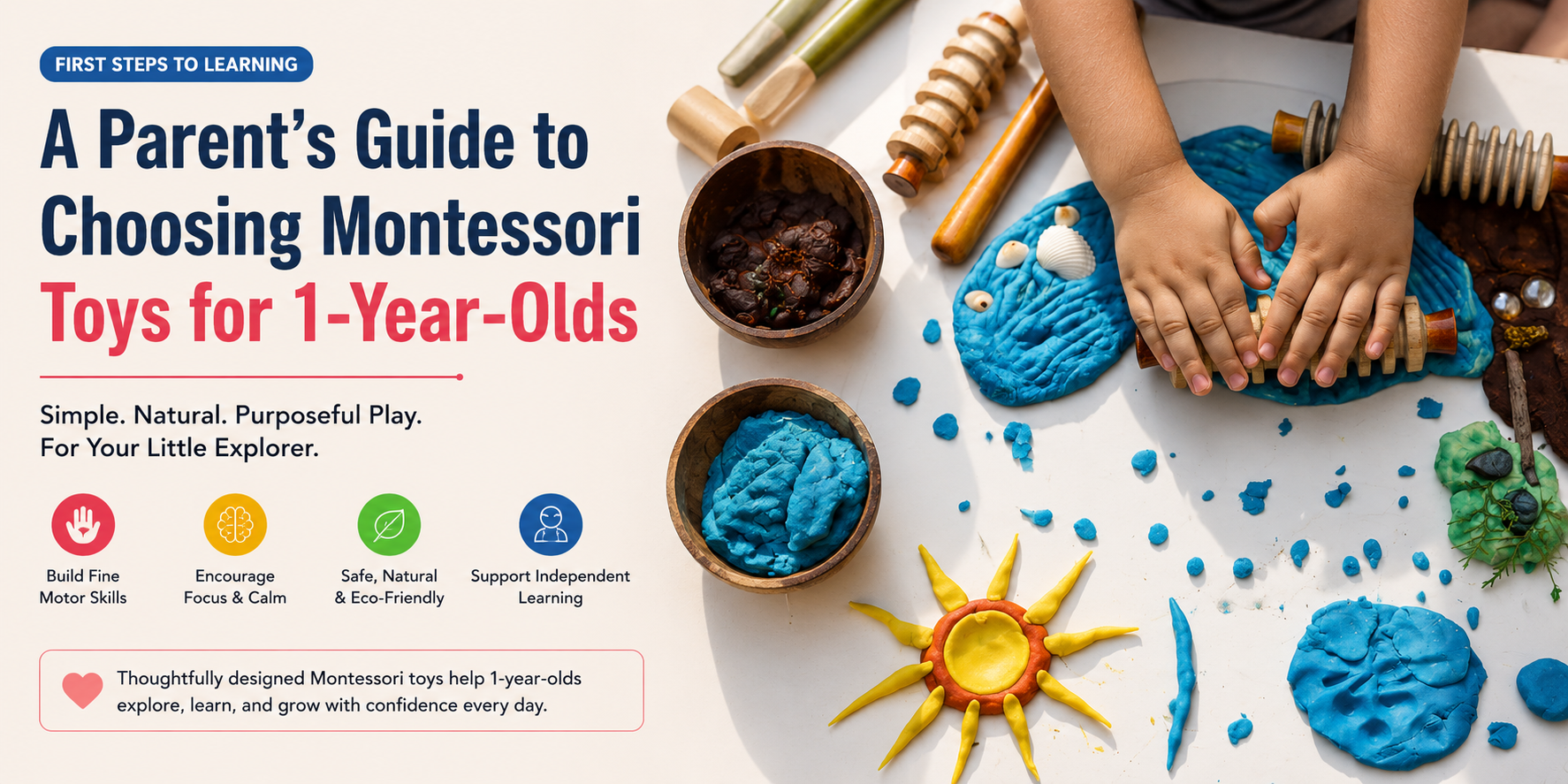
Purposefully designed Montessori toys help strengthen hand muscles, improve hand-eye coordination, and encourage focused, independent play through hands-on learning experiences. For parents looking for screen-free and skill-building activities, thoughtfully made wooden toys offer the perfect balance of education and engagement.
Why Montessori Toys Are Excellent for Fine Motor Development
Unlike flashy electronic toys, Montessori-inspired toys are intentionally simple. They encourage children to explore, repeat, and master skills at their own pace.
Children naturally develop:
-
finger strength and grip control
-
hand-eye coordination
-
concentration and patience
-
independent problem-solving
-
confidence through self-correction
Many parents today prefer wooden Montessori toys because natural textures, weight, and tactile feedback help children better understand movement and coordination during play.
How Fine Motor Skills Develop Between Ages 1–3
Fine motor milestones evolve rapidly during toddlerhood.
Around 1 Year
Children begin:
- grasping objects with precision
- stacking simple blocks
- turning pages
- picking up small items
This is the perfect stage to introduce age-appropriate toys for 1-year-olds that encourage safe exploration and repetitive learning.
Around 2 Years
Toddlers improve:
- wrist rotation
- puzzle solving
- controlled stacking
- shape recognition
Interactive fine motor skill toys become extremely valuable during this stage of development.
Around 3 Years
Preschoolers develop:
- stronger coordination
- advanced finger control
- early writing readiness
- better problem-solving abilities
Introducing structured educational toys for kids can further strengthen concentration and independent thinking.
7 Best Montessori Puzzles & Stacking Toys for Little Hands
1. Wooden Ring Stackers
A classic Montessori favorite, wooden stacking toys help toddlers learn size sequencing, balance, and coordination. Ring stackers also strengthen the pincer grasp and improve wrist movement through repetitive play.
These are excellent early-learning toys for toddlers beginning independent play.
2. Single Shape Peg Puzzles
Simple peg puzzles introduce toddlers to shapes, spatial awareness, and controlled hand movement. Starting with one shape at a time helps avoid overwhelm while building confidence through repetition.
Beautifully crafted wooden puzzles are especially useful for developing early problem-solving and hand control skills.
3. Object Permanence Boxes
Object permanence boxes teach children that objects continue to exist even when out of sight. Dropping a ball into a hole and retrieving it through a drawer strengthens coordination while introducing important cognitive concepts.
These Montessori-inspired activities support:
- concentration
- wrist control
- visual tracking
- independent exploration
4. Nesting Bowls & Stacking Cubes
Nesting toys encourage toddlers to compare sizes, stack carefully, and manipulate objects with precision. These open-ended learning tools also support creativity and independent exploration.
Parents exploring open-ended toys often choose stacking cubes because children can use them in multiple ways as they grow.
5. Multi-Shape Sorters
Shape sorters challenge children to rotate objects, identify differences, and coordinate precise movements. They are excellent for developing dexterity and logical thinking.
Many educational wooden toys combine shape recognition with sensory learning, making them ideal for toddlers who enjoy hands-on exploration.
6. Balance Stacking Stones
Balancing irregular wooden stones requires patience, focus, and careful hand control. These toys are fantastic for slightly older toddlers who enjoy creative challenges.
Children working with problem solving toys often improve:
- motor planning
- concentration
- balance
- coordination
These activities also encourage calm, screen-free play.
7. Chunky Wooden Animal Puzzles
Chunky puzzles are easy for small hands to grip while introducing toddlers to animals, shapes, and imaginative storytelling. They also double as pretend play toys, making them versatile developmental tools.
Many parents combine wooden animal toys with pretend play toys to encourage both cognitive and social development.
Why Wooden Montessori Toys Work Better for Toddlers
Compared to plastic alternatives, wooden toys provide a richer sensory experience. Children can feel the texture, weight, and temperature of natural materials, which helps improve sensory processing and body awareness.
Parents looking for sustainable and safe play options increasingly prefer eco-friendly toys because they are:
- durable
- visually calming
- safe for teething babies
- environmentally conscious
- less overstimulating
High-quality wooden toys also tend to support longer, more focused play sessions.
How to Choose the Right Fine Motor Toy for Your Child
The best toy is one that matches your child’s current developmental stage and curiosity level.
When selecting Montessori-inspired toys, consider:
- grip strength
- coordination level
- attention span
- problem-solving ability
- current interests
Purposefully designed wooden learning toys encourage repeated engagement without overwhelming children with lights or excessive stimulation.
Tiny Hands, Big Learning Moments
Fine motor development begins through simple, everyday play experiences. Whether your child is stacking rings, solving puzzles, or balancing wooden stones, each movement helps build concentration, coordination, independence, and confidence.
By introducing thoughtfully designed Montessori educational toys early, parents can create meaningful learning opportunities that support long-term child development while keeping play engaging, calming, and screen-free.

Leave a comment
This site is protected by hCaptcha and the hCaptcha Privacy Policy and Terms of Service apply.