Childhood has changed a lot in recent years. Toys today are often louder, faster, and designed for quick entertainment. At the same time, many parents are beginning to look for calmer and more meaningful ways for children to play and learn.
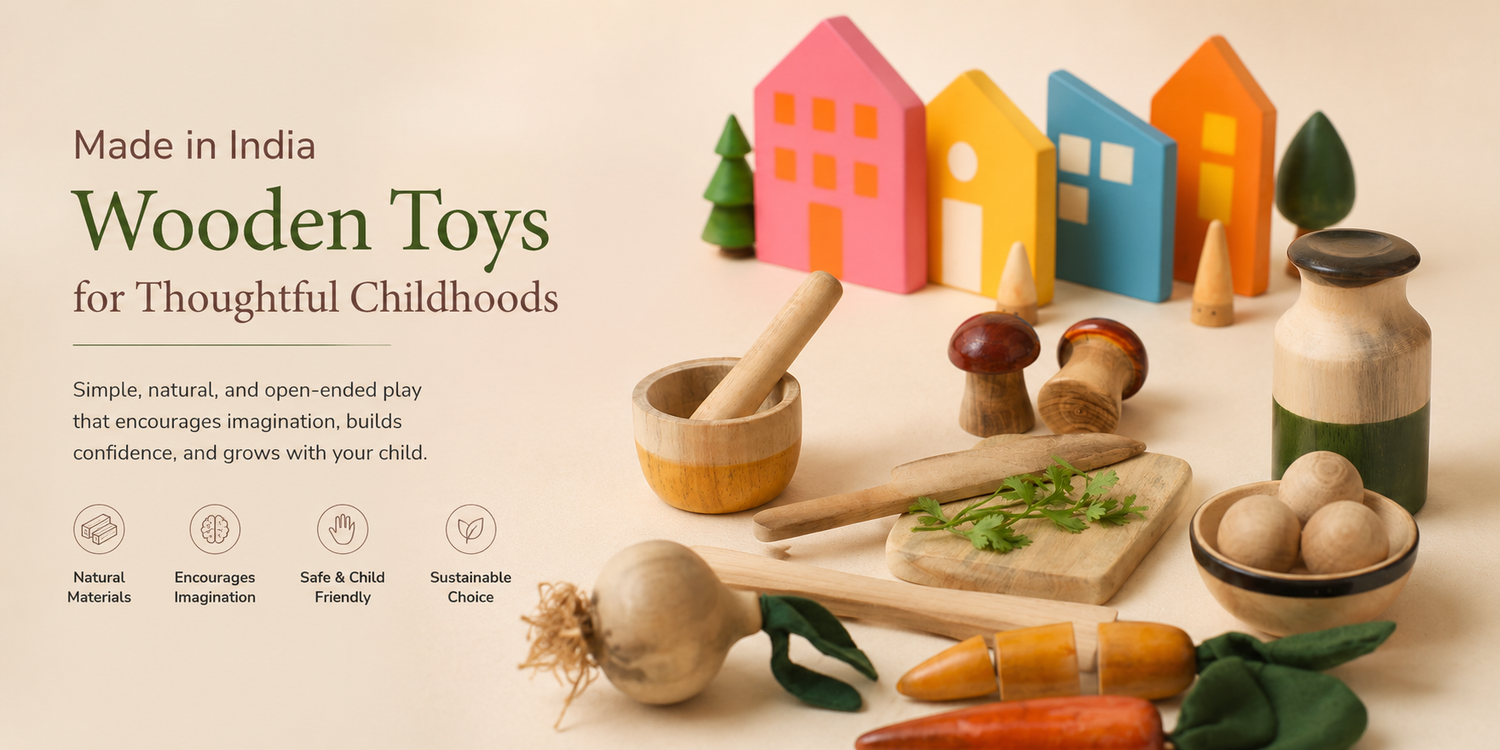
This growing shift has brought renewed attention to wooden toys and open-ended play materials that support imagination, movement, creativity, and independent thinking.
Rather than focusing on constant stimulation, thoughtful play encourages children to slow down, explore freely, and stay engaged in their own ideas for longer periods of time.
At Bombay Toy Company, we believe play should feel natural, comforting, and creative while giving children space to grow at their own pace.
Thoughtful Play in Everyday Childhood
Play is one of the earliest ways children understand the world around them.
Before formal learning begins, children learn through:
- touching
- observing
- repeating
- stacking
- balancing
- pretending
- experimenting
Simple play experiences often create more room for this kind of learning because children are not limited by fixed instructions or fast-moving outcomes.
Many parents today are choosing toys that support:
- imagination over entertainment
- curiosity over distraction
- interaction over passive engagement
This gradual shift is also changing how families think about toys inside the home and the role play has in everyday childhood.
Simpler Play in Modern Childhood
Modern childhood is filled with constant input from screens, sounds, flashing lights, and rapidly changing content. While entertainment has become more accessible, many families are also noticing the value of slower and quieter play experiences.
Simpler toys often help create calmer environments where children can focus more deeply on what they are doing.
Parents exploring more intentional play spaces often choose wooden toys because they encourage children to interact freely instead of following a single fixed purpose.
These kinds of toys are often revisited again and again in different ways as children grow.
Open-Ended Play and Independent Thinking
Open-ended play allows children to decide how they want to use a toy.
A single object can become:
- part of a story
- a balancing activity
- a building material
- an imaginary character
- a pretend-play setup
There is no single correct outcome.
This freedom encourages children to:
- think independently
- make choices confidently
- experiment without pressure
- develop creativity naturally
Many families interested in child-led learning approaches explore Montessori toys because they support hands-on interaction and self-directed play.
Material and Sensory Experience During Play
Young children experience the world through their senses long before they fully understand words or instructions.
The feeling of holding, carrying, arranging, stacking, or sorting objects helps children build important connections through movement and repetition.
Natural materials often provide a softer and more grounded sensory experience during play. Texture, weight, shape, and touch all become part of how children interact with their environment.
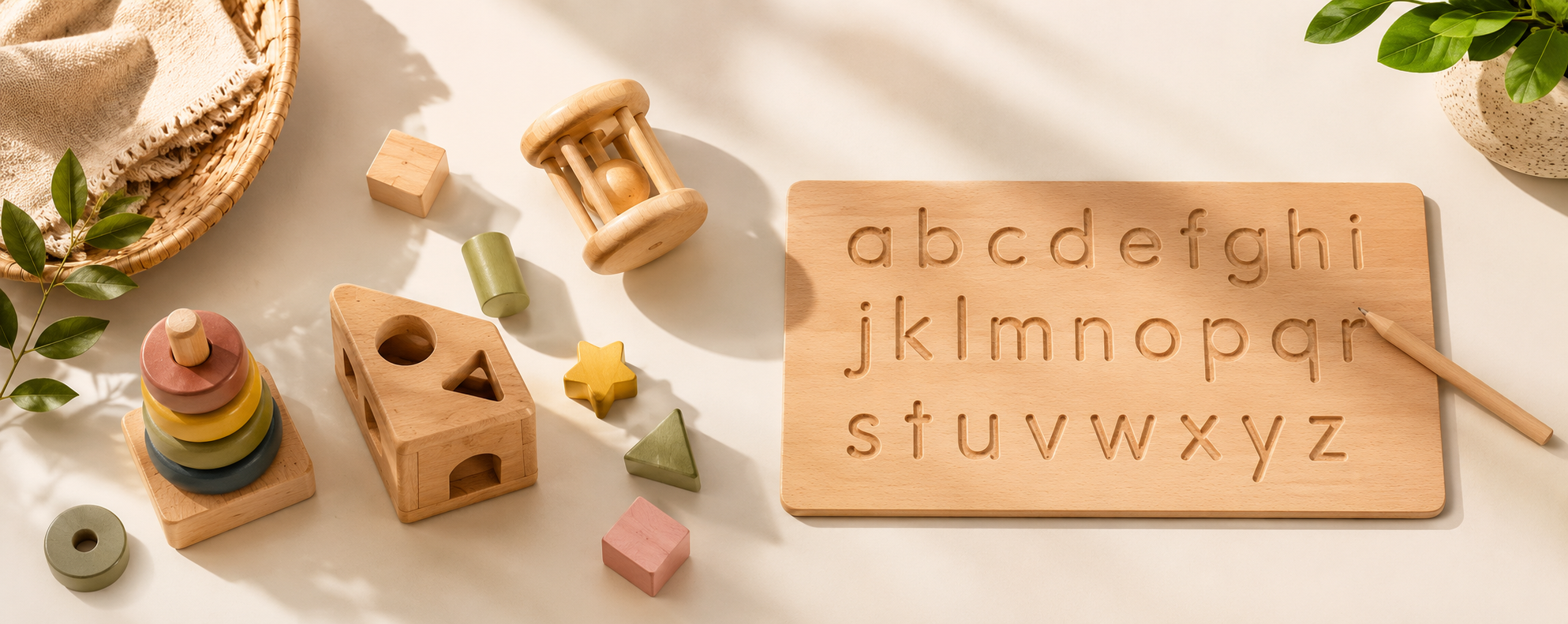
Activities connected to sensory play can help children stay engaged while encouraging exploration through touch and movement.
Longer Attention Through Open-Ended Play
Children are naturally curious when they are given space to explore without interruption.
Toys with fewer distractions often lead to:
- longer engagement
- repeated experimentation
- imaginative storytelling
- deeper concentration
When toys do not constantly direct the child, children begin creating their own ideas and interactions.
This type of slower engagement can feel very different from fast-paced entertainment because the child becomes an active participant in the play experience rather than simply responding to stimulation.
Many parents trying to reduce overstimulation at home prefer open-ended toys that can be used in many different ways over time.
Simple play often creates moments where children stay engaged far longer than expected, especially when there are no fixed instructions or outcomes.
Imagination and Pretend Play
As children grow, imaginative play becomes an important part of emotional and social development.
Pretend play allows children to:
- recreate everyday experiences
- build stories
- express emotions
- practice communication
- explore problem-solving
Simple toys often leave more space for imagination because children are free to decide what the toy represents in that moment.
Families looking to encourage storytelling and role-based interaction often include pretend play toys as part of everyday play routines.
Play moments built around imagination often look very simple from the outside, but they allow children to create entire worlds through storytelling and exploration.
Choosing Fewer Toys With More Meaning
Many parents today are becoming more mindful about the number of toys entering the home.
Instead of constantly adding new toys, families are increasingly choosing play materials that:
- last longer
- stay relevant across ages
- encourage repeated use
- support different kinds of play
This approach often creates:
- less clutter
- calmer play spaces
- more meaningful engagement
- stronger replay value
The focus slowly shifts from quantity toward the quality of the play experience itself.
Childhood, Slowed Down
Children do not always need constant entertainment.
There is value in moments where children can quietly:
- build
- arrange
- imagine
- repeat
- observe
- experiment
Slower play gives children time to develop ideas in their own way without feeling rushed toward an outcome.
For many families, thoughtful toys become part of creating a calmer home environment where play feels more natural, creative, and connected to everyday childhood.
Thoughtful Play for Different Stages of Childhood
Children engage with play differently as they grow.
During the early years, play is often focused on sensory exploration and movement. As children grow older, they begin exploring storytelling, problem-solving, role play, and imaginative interaction in more complex ways.
Parents often choose different play materials depending on the child’s stage and interests, whether they are exploring collections for babies, toddlers, or preschool-age children learning through more independent play experiences.
A More Intentional Approach to Play
Across many homes, there is a growing interest in creating childhood experiences that feel calmer, more thoughtful, and less overwhelming.
Wooden toys continue to remain part of this shift because they encourage children to interact, imagine, build, and explore at their own pace.
Rather than rushing play, thoughtful materials often allow childhood to unfold more naturally through curiosity, creativity, and open-ended discovery over time.

Leave a comment
This site is protected by hCaptcha and the hCaptcha Privacy Policy and Terms of Service apply.