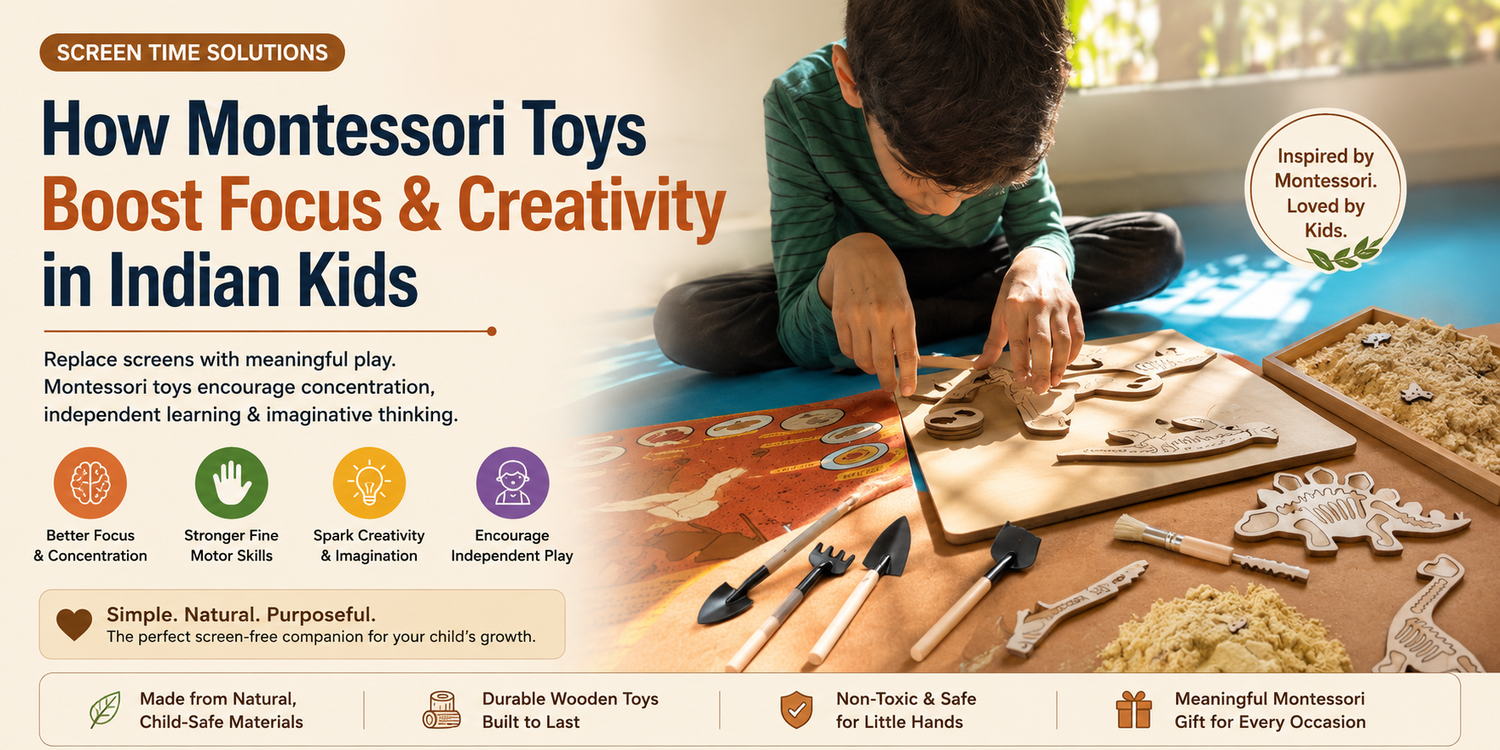
Screens have quietly become a part of everyday childhood. Whether during meals, travel, or busy work hours, many parents rely on mobile phones and tablets to keep children occupied. While digital content can sometimes be educational, excessive screen exposure often affects attention span, sleep quality, emotional regulation, and independent play habits.
For families searching for healthier alternatives, thoughtfully designed Montessori toys offer a calm, engaging, and development-focused way to encourage deeper learning through hands-on exploration.
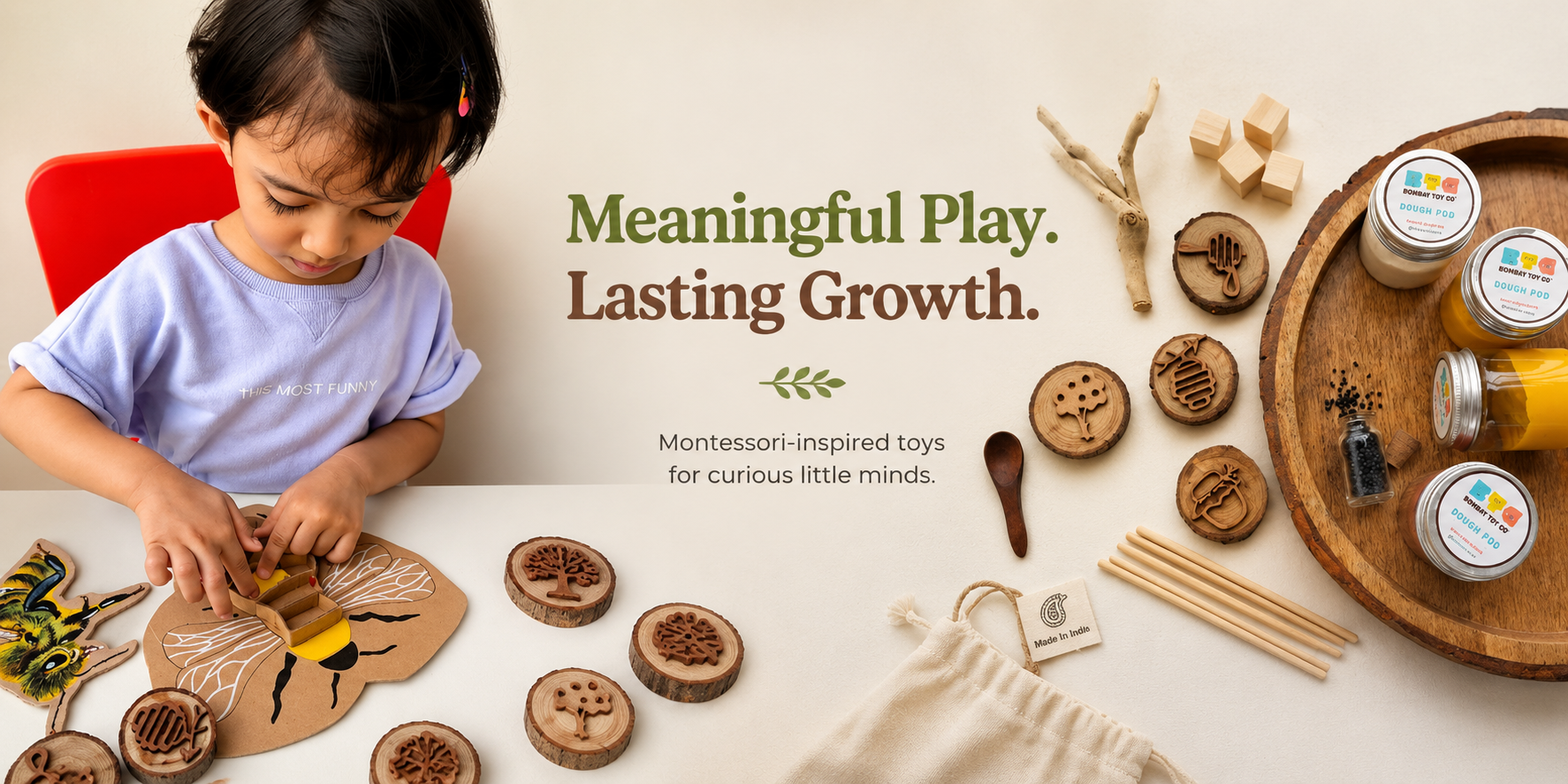
Unlike fast-paced digital entertainment, Montessori-inspired play helps children slow down, focus, solve problems, and interact meaningfully with their environment.
Why Excessive Screen Time Can Affect Early Childhood Development
Young children learn best through movement, touch, experimentation, and real-world interaction. Excessive passive screen consumption limits opportunities for physical and sensory learning experiences.
Many parents notice signs such as:
reduced concentration
irritability after screen use
difficulty with independent play
low patience levels
shorter attention spans
Replacing some screen time with purposeful activities and open-ended toys can help children engage more deeply and naturally.
How Montessori Toys Encourage Better Focus
Montessori toys are intentionally designed to avoid overstimulation. Instead of flashing lights and loud sounds, they encourage children to participate actively in play.
Purposeful wooden Montessori toys help children:
- focus on one activity at a time
- repeat actions independently
- build patience and concentration
- strengthen problem-solving skills
- develop longer attention spans
Because the child controls the pace of play, these toys naturally support calmer and more mindful learning experiences.
Why Hands-On Play Improves Creativity
Creative thinking develops when children are free to experiment without fixed outcomes. Montessori-inspired activities encourage imagination through exploration rather than passive entertainment.
Many educational wooden toys allow children to:
- build
- stack
- sort
- balance
- create stories
- solve simple challenges
These open-ended interactions help strengthen cognitive flexibility and independent thinking over time.
Best Montessori Toys to Replace Screen Time
Stacking & Balancing Toys
Stacking toys encourage children to focus carefully while improving coordination and patience. Activities like balancing blocks or arranging rings keep toddlers engaged without overstimulation.
Purposefully designed wooden stacking toys are excellent for developing concentration and hand-eye coordination.
Sensory Play Activities
Sensory play helps children regulate emotions and stay engaged through tactile experiences. Exploring textures, movement, and materials naturally supports calm play patterns.
Many parents use sensory play toys to create screen-free activities that improve:
focus
sensory awareness
creativity
emotional regulation
Simple activities like dough play, scooping, sorting, and rolling can keep toddlers engaged for long periods.
Shape Sorters & Puzzle Toys
Puzzle-based activities encourage children to slow down and think carefully. These toys help improve logical thinking, grip control, and concentration.
Beautifully crafted wooden puzzles also strengthen:
problem-solving skills
visual coordination
patience
fine motor development
Fine Motor Skill Toys
Hands-on activities that involve grasping, threading, sorting, or posting objects help build stronger finger control and coordination.
Interactive fine motor skill toys support:
- writing readiness
- hand strength
- independent learning
- sustained engagement
These activities are especially helpful for toddlers transitioning away from excessive screen dependency.
Age-Wise Montessori Toy Ideas for Screen-Free Play
For Babies (0–12 Months)
At this stage, babies benefit from toys that encourage sensory exploration and movement.
Parents often introduce:
- grasping toys
- wooden rattles
- sensory balls
- simple tracking toys
Safe and calming wooden infant toys encourage early hand coordination and sensory discovery.
For Toddlers (1–3 Years)
Toddlers enjoy repetition, movement, and experimenting with cause and effect.
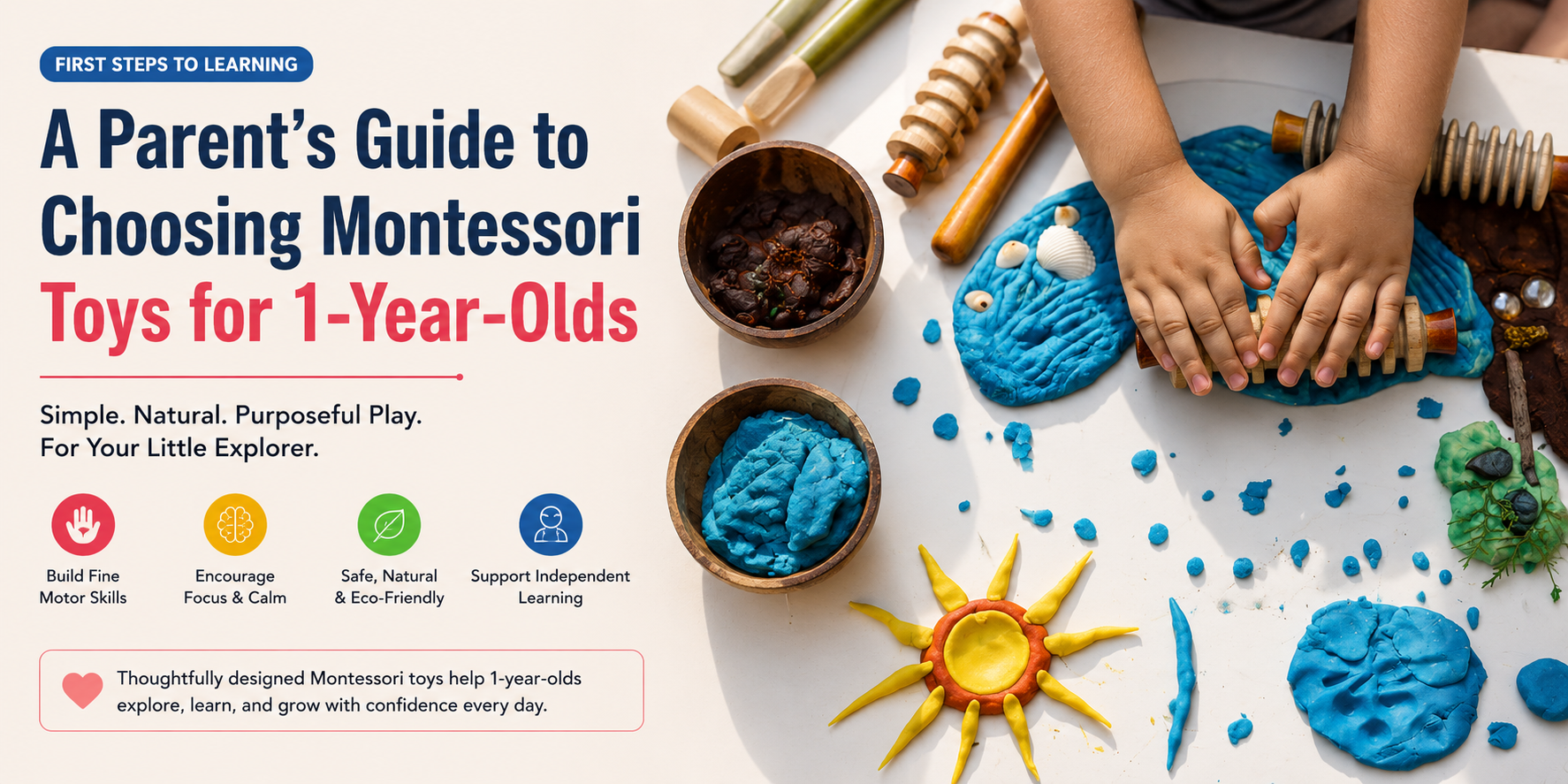
Purposeful toys for 1-year-olds and toys for 2-year-olds help build:
- concentration
- independence
- motor coordination
- early problem-solving skills
Activities like stacking, sorting, and posting objects work especially well during this stage.
For Preschoolers (3+ Years)
As creativity and imagination grow, children need toys that support more advanced thinking and exploration.
Many families introduce:
- balancing games
- building sets
- pretend play setups
- complex puzzles
Purposefully designed problem solving toys help preschoolers stay engaged while strengthening logical thinking and creativity.
Why Wooden Toys Create Calmer Play Experiences
Compared to battery-operated toys, wooden toys often create slower and more meaningful play patterns. Their natural textures and minimalist design reduce overstimulation while encouraging deeper engagement.
Parents increasingly choose eco-friendly toys because they are:
- durable
- visually calming
- non-toxic
- sustainable
- designed for long-term play
High-quality wooden toys also tend to encourage independent play without constant adult intervention.
Creating a Balanced Screen-Time Routine
Completely avoiding screens may not always be realistic, but creating intentional screen-free play opportunities can make a significant difference.
Helpful strategies include:
- rotating toys weekly
- setting up sensory play stations
- creating calm play corners
- encouraging open-ended activities
- choosing fewer but more purposeful toys
Introducing engaging Montessori educational toys helps children naturally shift toward more focused and creative play habits.
Helping Children Rediscover Meaningful Play
Children thrive when given opportunities to explore, create, move, and solve problems independently. Replacing excessive screen exposure with calm, hands-on learning activities can improve focus, emotional balance, creativity, and confidence over time.
Whether through stacking toys, sensory play, puzzles, or open-ended activities, thoughtfully designed Montessori-inspired toys help children reconnect with meaningful play experiences that support healthy development in a natural and joyful way.

Leave a comment
This site is protected by hCaptcha and the hCaptcha Privacy Policy and Terms of Service apply.