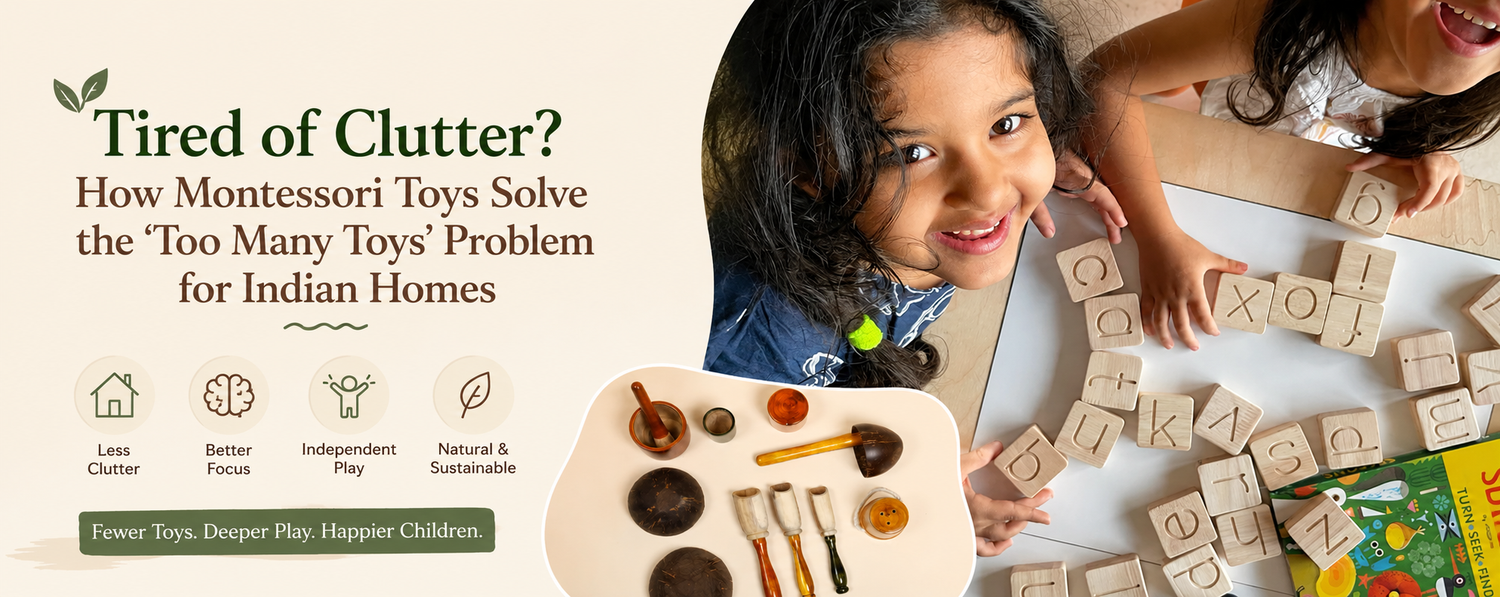
Many parents today feel frustrated by overflowing toy baskets, messy living rooms, and children losing interest in toys within minutes. It often feels like the more toys children have, the less they actually play meaningfully.
Small apartments, busy schedules, and constant exposure to new products make toy clutter a common challenge in Indian homes. But creating a better play environment does not always mean buying more. In many cases, children benefit more from fewer toys that encourage focus, imagination, and independent play.
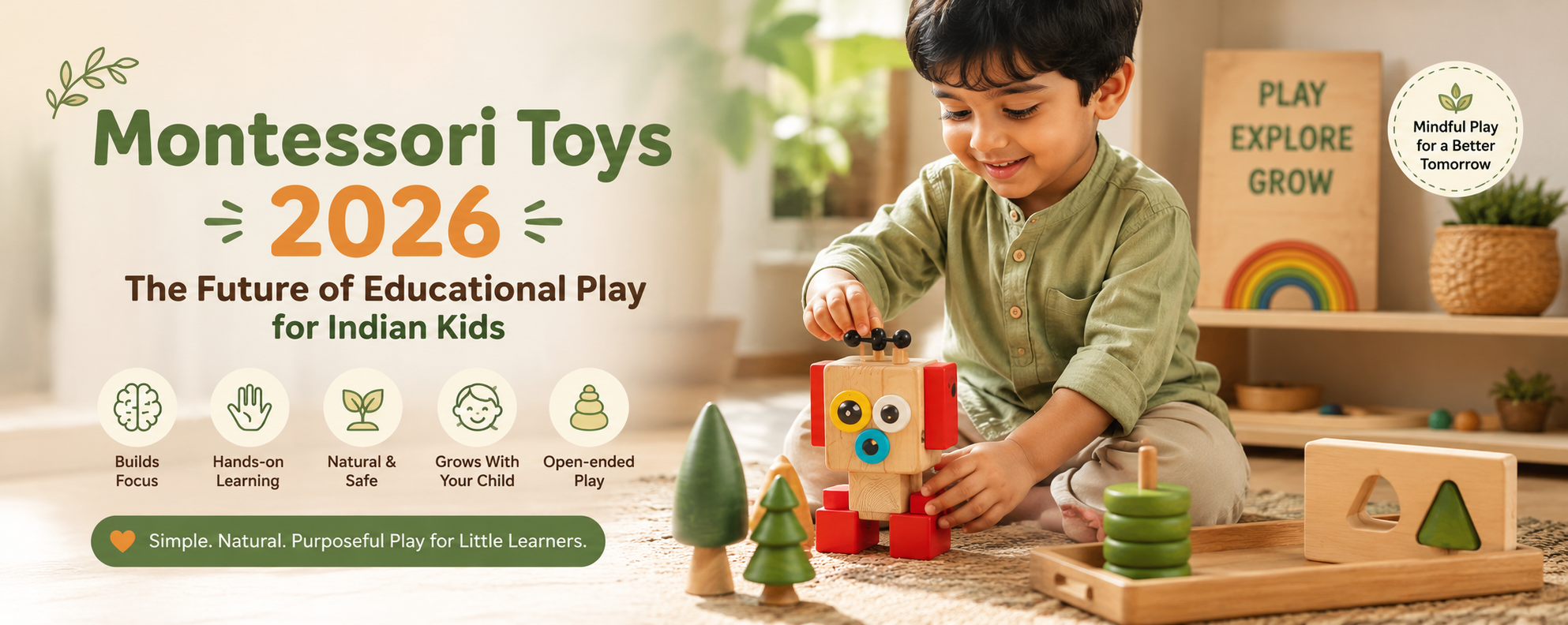
Montessori-inspired play spaces are designed around this idea. Instead of overwhelming children with endless options, they encourage calm, hands-on learning through simple and purposeful toys.
Explore thoughtfully designed Montessori Toys that support meaningful play without overstimulating children.
Why Children Often Play Better With Fewer Toys
When too many toys are available at once, children may quickly move from one activity to another without fully engaging.
Parents commonly notice:
-
toys scattered everywhere but rarely used properly
-
shorter attention spans
-
children asking for new toys constantly
-
difficulty keeping play spaces organized
-
overstimulation from noisy electronic toys
A simpler play setup can help children focus longer and interact more creatively with what they already have.
What Makes Montessori Style Play Different
Montessori-inspired toys are designed to encourage children to actively participate during play instead of passively watching lights, sounds, or automatic actions.
These toys usually focus on:
-
hands-on exploration
-
independent learning
-
fine motor development
-
concentration
-
problem solving
-
sensory engagement
Simple wooden toys, tracing activities, stacking games, and pretend play tools often provide more lasting engagement than fast-paced electronic toys.
Browse calming and creative Open Ended Toys that allow children to explore play in multiple ways.
How Toy Rotation Helps Reduce Clutter
One practical Montessori-inspired method many parents now follow is toy rotation.
Instead of placing every toy out at the same time, only a small group of toys stays accessible while others are stored away temporarily.
This approach can help:
-
reduce visible clutter
-
make play areas easier to manage
-
keep children interested in existing toys
-
encourage deeper engagement
-
avoid overstimulation
Even rotating toys every two weeks can make older toys feel fresh and exciting again.
Why Wooden Toys Often Hold Attention Longer
Wooden toys tend to encourage slower and more focused play experiences.
Children interact differently with natural materials because they can feel texture, weight, balance, and movement more clearly during play.
Many parents also prefer wooden toys because they:
-
last longer
-
look calmer in home spaces
-
support screen free play
-
encourage imagination
-
avoid excessive lights and sounds
Explore beautifully crafted Wooden Learning Toys designed for hands-on exploration and everyday learning.
Creating a Calmer Play Space at Home
A calmer play environment does not require a separate playroom or expensive furniture. Small changes often make a noticeable difference.
Keep Toys at Child Height
Low shelves help children independently choose and return toys.
Limit Available Toys
Keeping fewer toys visible at once often improves focus and reduces mess.
Choose Multi Use Toys
Open-ended toys can be used in different ways as children grow.
Add Quiet Play Activities
Tracing boards, sensory bins, stacking toys, and pretend play setups encourage calmer engagement.
Signs Your Child May Be Overstimulated by Toys
Children sometimes show subtle signs when their environment feels overwhelming.
These may include:
-
constantly switching activities
-
getting bored quickly
-
difficulty focusing
-
throwing toys around instead of playing
-
becoming frustrated during playtime
A simpler setup with purposeful toys may help create more meaningful play routines.
Helpful Toy Categories for Intentional Play
Some toy categories naturally support longer engagement and less clutter.
Wooden Blocks and Stacking Toys
Support coordination, creativity, and spatial awareness.
Pretend Play Toys
Encourage storytelling, communication, and emotional development.
Sensory Play Activities
Support tactile learning and calm exploration.
Tracing and Fine Motor Activities
Helpful for concentration and hand control.
Explore more purposeful options inside our Wooden Montessori Toys collection.
What Many Parents Notice After Simplifying Toys
Parents who reduce toy clutter often observe positive changes during playtime.
Common experiences include:
-
children staying engaged longer
-
less mess around the house
-
more imaginative play
-
calmer play routines
-
easier cleanup habits
-
improved independent play
Simple changes in how toys are displayed and selected can influence how children interact with their environment every day.
Real Parent Experiences
“Playtime feels less chaotic now”
“We reduced the number of toys available and introduced more open-ended wooden toys. My son now spends much more time building and exploring independently.”
Priyanka S., Pune
“Toy rotation actually worked for us”
“Instead of constantly buying new toys, we started rotating existing ones every few weeks. The clutter reduced and my daughter became more focused during play.”
Neha R., Mumbai
Read More
Frequently Asked Questions
Can fewer toys really help children focus better?
Many parents notice that children engage more deeply when they are not overwhelmed by too many choices during playtime.
What is toy rotation?
Toy rotation means keeping only a small number of toys accessible at one time and rotating different toys periodically.
Are wooden toys better for independent play?
Many wooden toys encourage open-ended exploration, which naturally supports longer and more independent play sessions.
How many toys should be available at once?
There is no fixed number, but many families prefer keeping a smaller selection visible to reduce clutter and improve focus.
Which toys work best for calmer playtime?
Open-ended toys, stacking toys, tracing activities, pretend play sets, and sensory play materials often encourage calmer engagement.

Leave a comment
This site is protected by hCaptcha and the hCaptcha Privacy Policy and Terms of Service apply.