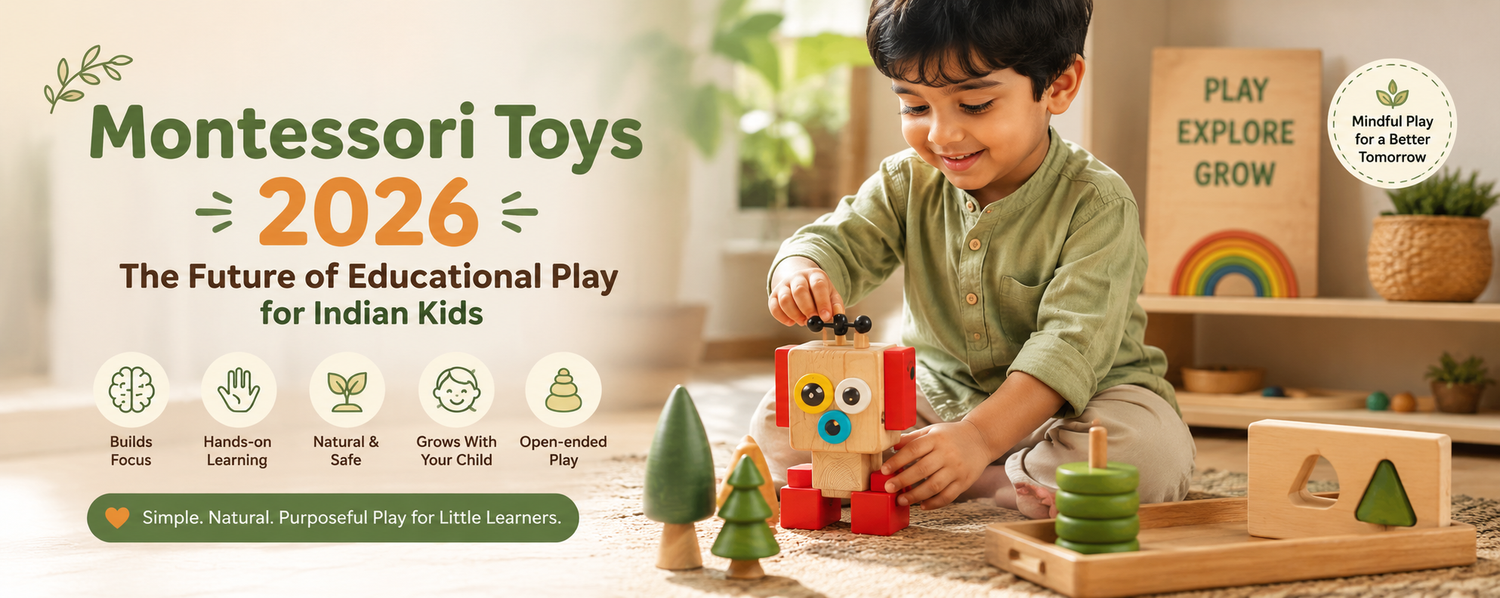
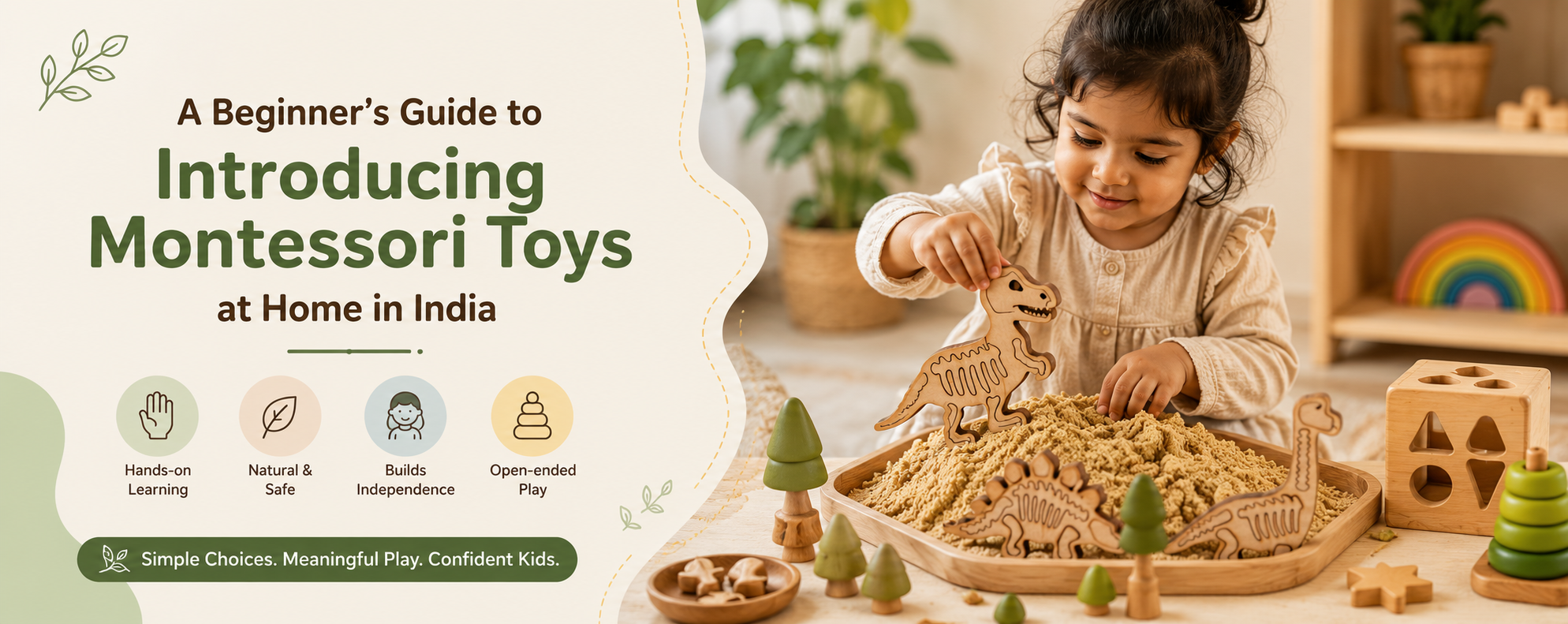
Indian parenting is slowly moving away from loud, overstimulating toys and toward calmer, more intentional play experiences. In 2026, families are focusing more on screen-free activities, independent learning, and toys that encourage children to think, explore, and create on their own.
Instead of filling playrooms with dozens of short-lived toys, many parents now prefer fewer, better-designed learning materials that support concentration, creativity, and everyday skill development.
This shift is one of the biggest early learning trends shaping modern play spaces across Indian homes.
A New Era of Screen-Free Childhood
Many parents today are actively searching for ways to reduce passive screen exposure. Children often engage more deeply when play is hands-on, tactile, and self-directed.
Purposeful play activities can help children:
-
stay engaged for longer periods
-
improve focus naturally
-
explore creativity independently
-
build confidence through repetition
-
strengthen fine motor coordination
This is one reason why open-ended wooden toys, sensory activities, and practical learning setups are becoming more common in modern homes.
Parents looking for calmer play environments often explore collections like Montessori Toys, Open Ended Toys, and Wooden Toys.
Why Minimalist Play Is Growing in 2026
One major parenting trend in 2026 is toy simplification.
Instead of constantly buying new entertainment-based toys, families are choosing play materials that children can use in multiple ways over time.
This approach supports:
-
independent play
-
toy rotation systems
-
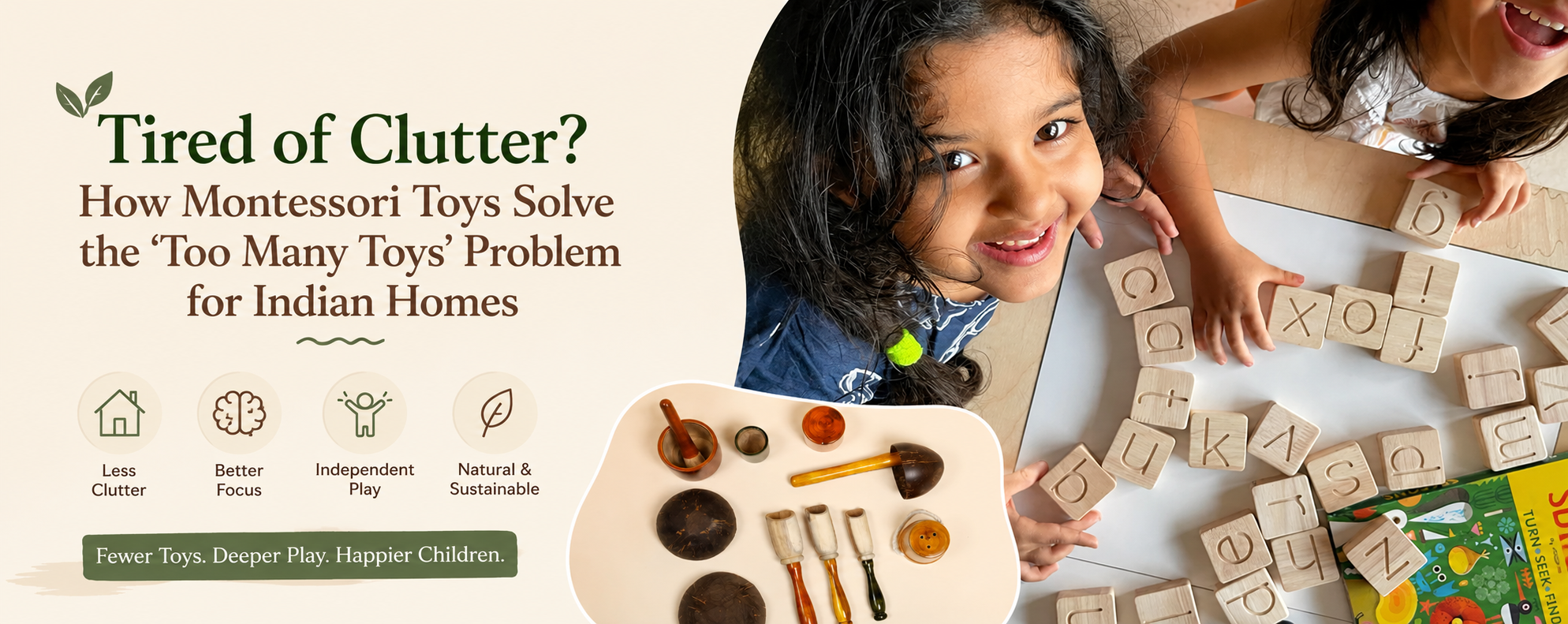
reduced household clutter
-
deeper concentration
-
more imaginative thinking
Simple wooden blocks, tracing boards, pretend-play materials, and sensory tools are often preferred because they encourage active participation rather than passive entertainment.
Learning Through Everyday Play
Another growing trend is integrating learning naturally into everyday activities.
Children often learn best when they are actively involved in play experiences such as:
Fine Motor Activities
Tracing boards, stacking toys, sorting games, and sensory scooping tools support hand coordination and early writing readiness.
Pretend Play Experiences
Cooking sets, gardening toys, and role-play materials help children practice communication, sequencing, and social interaction.
Sensory Exploration
Textures, movement, natural materials, and open-ended play setups encourage curiosity and calm engagement.
Parents interested in sensory-based learning can also explore Sensory Play and Pretend Play Toys.
What Indian Parents Are Prioritizing in 2026
Modern toy buying decisions are increasingly influenced by long-term value rather than trends alone.
Parents now commonly look for:
Safe Materials
Natural textures and child-safe finishes are becoming more important than flashy features.
Longer Play Value
Open-ended toys that grow with the child are preferred over single-purpose toys.
Calm Play Spaces
Families are creating simpler play corners that encourage focused play instead of overstimulation.
Skill-Based Play
Parents want activities that support creativity, concentration, independence, and communication.
Most Loved Play Trends for 2026
Screen-Free Learning Corners
Dedicated spaces with books, puzzles, blocks, and tracing activities.
Toy Rotation Systems
Keeping only a few toys accessible at a time to improve engagement.
Open-Ended Wooden Play
Simple materials that encourage imagination instead of fixed outcomes.
Sensory-Led Activities
Play dough tools, scooping kits, and tactile activities for calm learning.
Independent Play Setups
Low shelves and self-access play materials inspired by Montessori-style environments.
Small Changes That Make a Big Difference
Parents do not need elaborate playrooms to support meaningful learning at home.
Even simple changes can help:
-
reduce toy quantity
-
rotate toys weekly
-
create calm play areas
-
encourage self-directed activities
-
choose fewer, more versatile toys
These small shifts often improve both play quality and home organization.
What This Means for the Future of Play
The future of educational play is becoming less about constant stimulation and more about meaningful engagement.
In 2026, many Indian families are choosing toys and activities that help children:
-
think independently
-
stay curious
-
play creatively
-
develop patience
-
enjoy screen-free learning
Purposeful play is no longer just a trend. It is becoming a long-term parenting approach focused on balanced childhood development.
Quick Take for Parents
Children do not always need more toys. Often, they need better opportunities to explore, imagine, and engage deeply with play.
Simple, open-ended activities can create richer learning experiences than overstimulating entertainment-based toys.
Frequently Asked Questions
Are minimalist toys better for children?
Many children engage more deeply when fewer toys are available. Simpler play setups can support focus, creativity, and independent exploration.
Why are parents moving toward screen-free play?
Parents are increasingly looking for activities that encourage real-world interaction, movement, communication, and hands-on learning.
What types of toys support open-ended play?
Wooden blocks, tracing boards, pretend-play sets, sensory materials, and stacking activities are commonly used for open-ended learning.
How many toys should children have available at once?
Many families follow toy rotation systems where only a small selection of toys is accessible at one time to avoid overstimulation.
Read More
Explore more parenting and play ideas:
-
How Montessori Toys Foster Emotional Development in Toddlers
-
Transform Your Home: A Simple Guide to Creating a Montessori Play Corner in India
-
Reducing Screen Time for Kids: Why Wooden and Eco-Friendly Toys Are the Best Alternatives
-
Unlocking Creativity: The Hidden Benefits of Simple Natural Toys for Indian Children

Leave a comment
This site is protected by hCaptcha and the hCaptcha Privacy Policy and Terms of Service apply.