Many Indian parents today feel overwhelmed by overflowing toy baskets, noisy plastic toys, and short attention spans during playtime. Children often move from one toy to another within minutes, while parents continue searching for “better” toys that will finally keep them engaged.
The reality is that children usually do not need more toys. They need more meaningful play.
That is why many families are now exploring Montessori-inspired play at home. Instead of focusing on quantity, Montessori encourages calm environments, open-ended materials, and independent exploration through purposeful play.
You do not need a Pinterest-perfect playroom or expensive furniture to begin. A few thoughtful changes at home can completely transform how your child learns and plays.
What Makes Montessori Play Different?
Montessori-inspired toys are designed to encourage children to actively participate in play instead of passively watching lights, sounds, or automatic movements.
These toys usually focus on:
-
concentration
-
independence
-
sensory exploration
-
fine motor development
-
problem-solving
-
creativity through repetition
Unlike overstimulating battery-operated toys, Montessori materials allow children to explore at their own pace and discover new ways to use the same toy repeatedly.
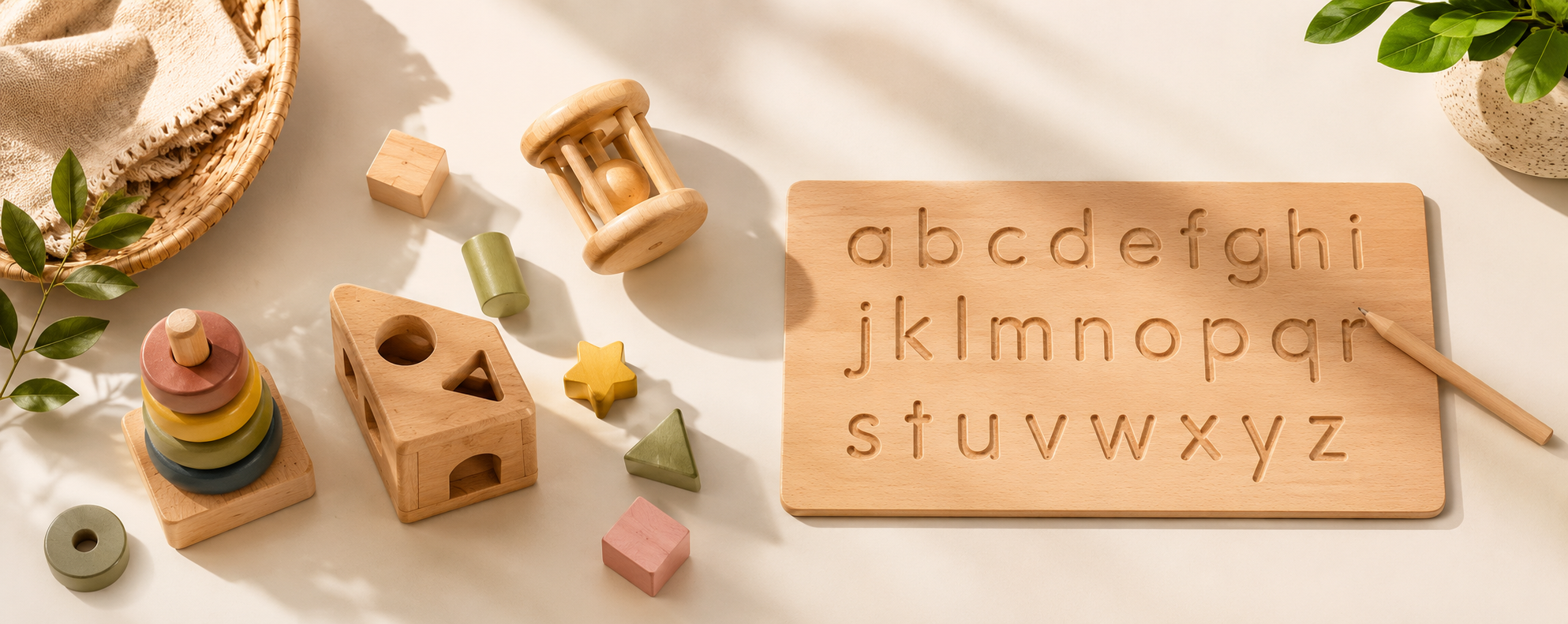
Many parents begin with simple materials from the Montessori Toys collection to create calmer and more focused play routines at home.
Start Small Instead of Replacing Everything
One of the biggest misconceptions about Montessori parenting is that families need to completely redesign their homes.
That is not necessary.
A Montessori-inspired setup can begin with just a few intentional changes.
Reduce Toy Clutter
Too many visible toys often overwhelm children and reduce their ability to focus deeply.
Instead of displaying everything at once:
-
keep fewer toys accessible
-
store extras away
-
rotate toys regularly
-
organize toys neatly on low shelves
This creates a calmer environment and encourages more independent play.
Choose Open-Ended Toys
Open-ended toys can be used in multiple ways depending on the child’s imagination and stage of development.
For example:
-
wooden blocks can become towers, roads, bridges, or pretend food
-
loose parts can support storytelling and imaginative play
-
tracing boards can be used repeatedly for skill-building
You can gradually introduce more creative play ideas through Open Ended Toys.
Why Toy Rotation Works So Well
Toy rotation is one of the simplest Montessori habits parents can adopt at home.
Instead of keeping all toys accessible every day:
-
display only 6 to 8 toys
-
rotate toys every 1 to 2 weeks
-
reintroduce older toys later
This keeps children interested without constantly buying new toys.
Parents often notice:
-
longer independent play sessions
-
fewer tantrums during playtime
-
improved concentration
-
less messy play areas
-
reduced screen dependency
Toy rotation works especially well in Indian apartments where space is limited.
Montessori Toys by Age
Montessori Play for Babies
Babies learn through movement, touch, sound, and visual exploration.
Good early materials include:
-
wooden rattles
-
sensory playmats
-
grasping toys
-
crochet toys
-
visual tracking materials
The goal is to support sensory development while encouraging natural curiosity.
Parents looking for calm sensory experiences can also explore Sensory Play.
Montessori Play for Toddlers
Toddlers love repetition and hands-on problem-solving.
At this stage, children enjoy:
-
stacking
-
sorting
-
matching
-
tracing
-
pouring activities
-
simple pretend play
Purposeful toys often hold toddler attention much longer because they encourage active participation instead of passive entertainment.
You can explore age-based learning ideas in the Toddler collection.
Montessori Play for Preschoolers
Preschoolers begin developing stronger imagination, concentration, and cognitive skills.
Helpful Montessori-style activities include:
-
alphabet tracing
-
counting boards
-
beginner puzzles
-
storytelling setups
-
role play
-
simple STEM exploration
Hands-on materials from Wooden Learning Toys can support this stage naturally.
Independent Play Begins With the Environment
Children are more likely to play independently when their environment feels accessible and calm.
Simple changes make a big difference:
Use Low Shelves
Low shelves allow children to independently choose and return toys without adult help.
Keep Play Spaces Calm
Avoid overcrowding play areas with too many colors, sounds, or distractions.
Create Predictable Play Routines
Children thrive when they know where toys belong and how to access them independently.
These small environmental shifts often improve focus and reduce overstimulation.
Why Many Indian Parents Are Moving Toward Montessori Play
Many families are now choosing Montessori-inspired setups because they support:
-
screen-free play
-
longer attention spans
-
independent learning
-
calmer routines at home
-
meaningful parent-child interaction
-
reduced toy clutter
Parents also appreciate that simple wooden toys usually blend naturally into modern homes instead of creating visually overwhelming spaces.
A parent from Bengaluru shared that after reducing toy clutter and rotating toys weekly, her child started spending longer periods building, sorting, and imagining independently instead of constantly asking for screen time.
Another parent mentioned that introducing fewer toys actually reduced mess and made cleanup easier for the whole family.
You Do Not Need a Perfect Montessori Home
Many parents delay starting because they believe Montessori requires expensive furniture or aesthetically designed playrooms.
But Montessori at home is really about:
-
respecting the child’s independence
-
simplifying the environment
-
offering purposeful play materials
-
allowing children to explore freely
Even one organized shelf and a few thoughtful toys can create meaningful changes in how children engage with play.
Helpful Collections to Explore
If you are gradually building a Montessori-inspired play setup, these collections work well together:
Common Parent Concerns
Do Montessori toys need to be expensive?
No. You can begin with just a few purposeful toys and gradually build your child’s play environment over time.
Can Montessori toys work alongside regular toys?
Yes. Most families slowly transition by reducing overstimulating toys while introducing calmer, open-ended materials.
How many toys should children have available?
Many parents find children engage better when only a small selection of toys is accessible at once.
Are wooden toys better for concentration?
Wooden toys often encourage slower, more focused play because they rely on child-led interaction instead of sounds and flashing lights.
Read More
-
How Montessori Toys Foster Emotional Development in Toddlers
-
Transform Your Home: A Simple Guide to Creating a Montessori Play Corner in India
-
Wooden Montessori Toys vs Traditional Toys: A Smart Choice for Indian Parents
-
Reducing Screen Time for Kids: Why Wooden and Eco-Friendly Toys Are Better Alternatives

Leave a comment
This site is protected by hCaptcha and the hCaptcha Privacy Policy and Terms of Service apply.