Wooden Pretend Play Toys for Toddlers and Preschoolers
In many Indian homes, children grow up in shared living spaces where everyday objects naturally become part of play. A spoon becomes a microphone, a box becomes a stove, and a chair turns into a shop counter. Wooden pretend play toys support this natural behavior by giving children simple, safe objects that help them recreate the world around them.
These toys are especially useful for toddlers and preschoolers who are beginning to understand routines, relationships, and everyday activities. Instead of fixed instructions, they allow children to build their own stories, repeat familiar scenarios, and explore imagination in a grounded way.
They also fit easily into daily routines, whether it is short independent play sessions or longer storytelling play with siblings.
Why Pretend Play Matters in Early Childhood
Pretend play is one of the earliest ways children begin to make sense of real life. Through imitation and imagination, they explore emotions, communication, and social understanding.
Wooden pretend play toys naturally support this stage by helping children:
- Recreate familiar daily routines such as cooking, shopping, or caring roles
- Express emotions through characters and storytelling
- Build early communication and vocabulary skills
- Understand relationships and social situations
- Develop imagination through open-ended scenarios
This form of play is not about correctness. It is about expression and discovery through repetition and imagination.
Everyday Use in Indian Homes
In Delhi, a parent shared how a simple wooden kitchen set became part of her child’s daily evening routine, where she “cooks” meals and serves them to family members before dinner. In Chennai, a father mentioned that a wooden dollhouse helped both siblings play together quietly after school, creating shared stories instead of separate screen time.
These toys often become part of everyday family rhythm rather than occasional play objects.
Wooden Kitchen Sets and Cooking Role Play
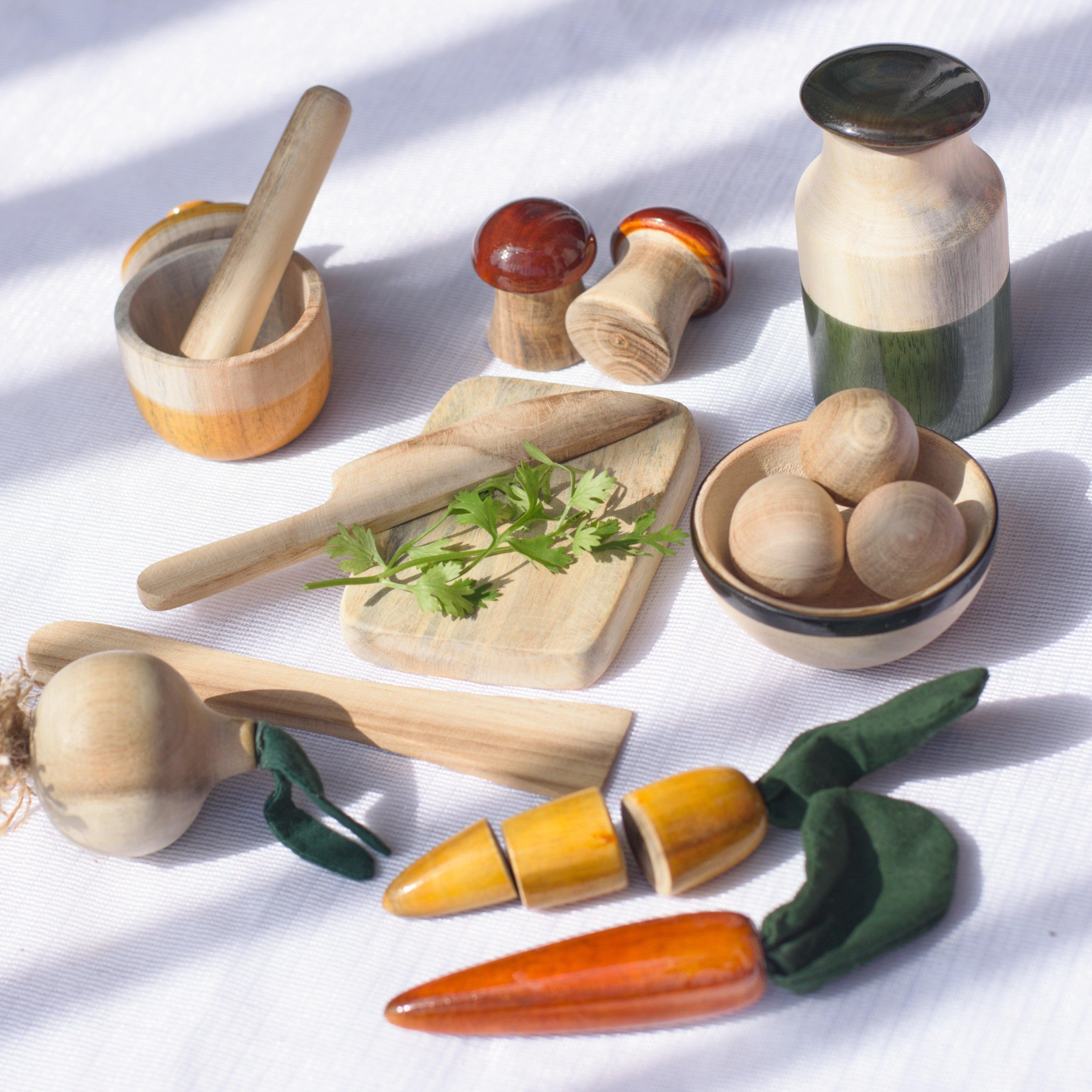
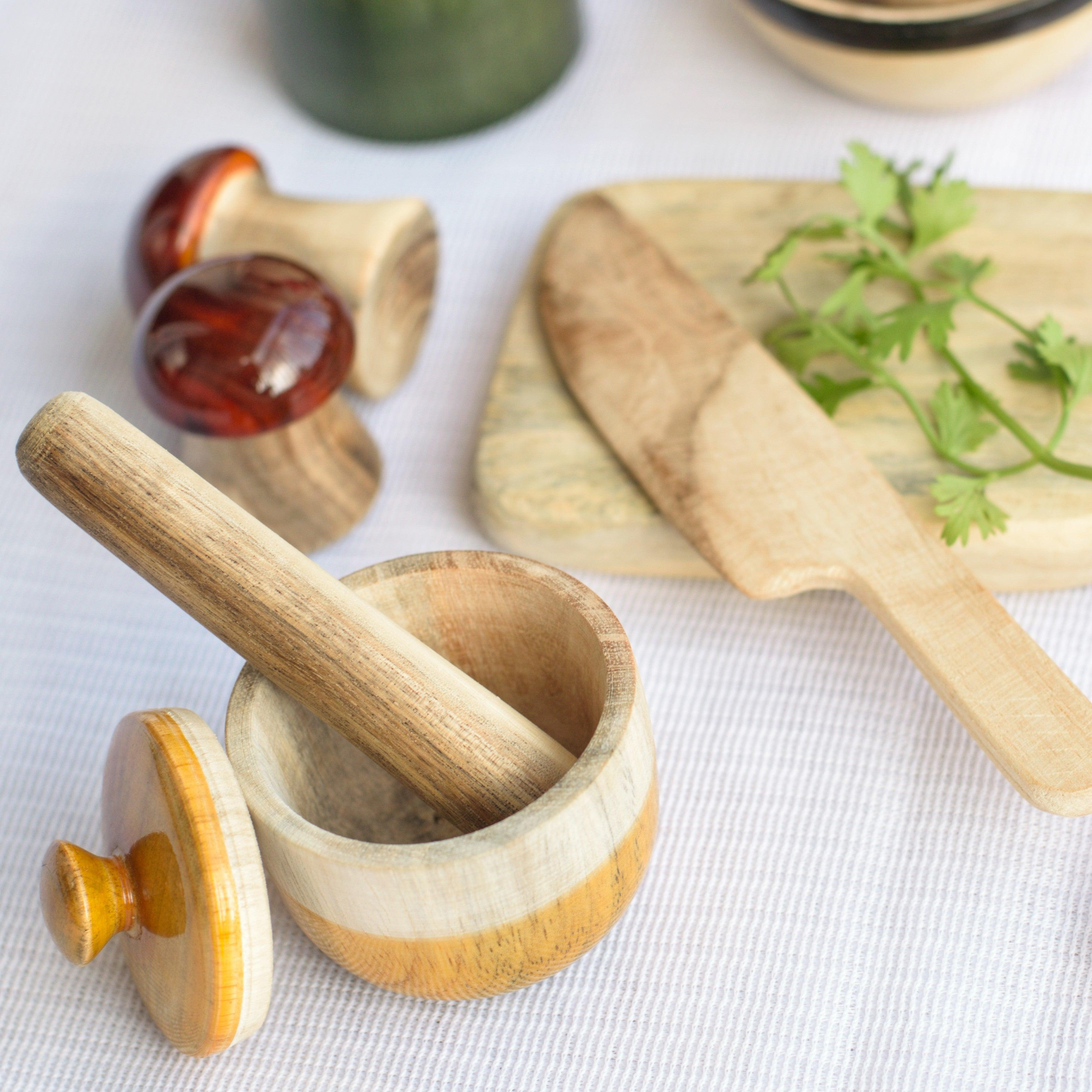
Wooden kitchen sets are among the most commonly used pretend play toys. They allow children to imitate real-world cooking activities such as preparing food, serving meals, and organizing utensils.
This supports:
- Understanding of daily household routines
- Role imitation and social learning
- Story creation and sequencing
- Fine motor coordination through handling objects
Explore related collection:
Wooden Kitchen Set
Wooden Dollhouses and Story-Based Play
Wooden dollhouses create a structured space where children can build their own family or community stories. Each room becomes part of a larger narrative that changes every day.
This helps children:
- Develop storytelling and sequencing skills
- Explore emotional expression through characters
- Understand home and social environments
- Engage in calm, focused independent play
Explore related collection:
Wooden Doll House
Vehicles, Tools, and Real-World Imitation Play
Wooden vehicles and tool sets allow children to recreate real-life scenarios such as construction work, travel, or repair activities. These simple objects become powerful storytelling tools.
Children often use them to:
- Build imaginative construction scenes
- Create movement-based stories like travel or delivery
- Combine with other toys for layered storytelling
- Repeat familiar real-world observations in play
Explore related collection:
Wooden Vehicle Toys
Wooden Dump Truck Toy
Connection With Other Wooden Toy Clusters
Wooden pretend play toys naturally connect with other play categories, but remain distinct because their focus is storytelling and role-based imagination.
They align closely with:
Wooden Toys for Kids for general play variety
Wooden Educational Toys for learning through play
Open Ended Play Toys for free imagination without rules
Story Toys for Kids for narrative-based learning
Each supports development differently, but pretend play remains centered on imitation and imagination.
How Parents Use Pretend Play Toys at Home
Most families integrate pretend play naturally into daily routines rather than treating it as structured learning.
Common practices include:
- Keeping a small set of toys visible and accessible
- Allowing children to create stories without correction
- Mixing different toys to expand storytelling possibilities
- Encouraging shared play between siblings or friends
- Rotating toys weekly to maintain interest
This approach helps children stay engaged while developing creativity and independence.
FAQs
What age are wooden pretend play toys suitable for?
They are generally suitable for toddlers and preschoolers, usually from around 2 to 6 years, depending on the toy type and complexity.
Do pretend play toys support learning?
Yes, they support communication, emotional expression, creativity, and early social understanding through role play.
Can children use these toys independently?
Yes, many children enjoy creating their own stories and playing independently without adult guidance.
Should pretend play toys be rotated?
Yes, rotating toys every few weeks helps maintain curiosity and encourages new storytelling ideas.